

7 Best Marine Stereos For Saltwater Environments Tested
We tested the top 7 marine stereos to find the best for saltwater. Discover which models offer superior durability, sound quality, and essential connectivity.
There is nothing quite like the feeling of cruising across open water with your favorite playlist providing the perfect backdrop to a sunny afternoon. However, the harsh reality of saltwater spray and relentless UV exposure can turn a standard stereo into a pile of corroded electronics within a single season. Choosing the right marine-grade hardware is the only way to ensure your soundtrack survives the elements while delivering the crystal-clear audio you expect.
Disclosure: As an Amazon Associate, this site earns from qualifying purchases. Thank you!
Fusion MS-RA770: Top Choice for Marine Audio
The Fusion MS-RA770 stands as the industry benchmark for a reason, blending a stunning glass touchscreen with legendary sound processing. It is the first marine stereo to offer built-in Wi-Fi, allowing for high-quality audio streaming that puts standard Bluetooth connections to shame. If you want a modern, smartphone-like interface that feels intuitive even when your hands are wet, this is the unit for you.
This system is built for the boat owner who refuses to compromise on connectivity or sound quality. The integration with Fusion’s PartyBus-Network allows you to sync audio across multiple zones, making it the perfect choice for larger vessels. If you are building a premium system and want a future-proof head unit that acts as the command center for your entire marine experience, the MS-RA770 is your definitive answer.
JL Audio MediaMaster 105: Best Premium System


When you prioritize audio fidelity above all else, the JL Audio MediaMaster 105 is the gold standard. It is engineered with a focus on high-end signal processing, ensuring that your music remains undistorted even when you are pushing the volume to compete with wind and engine noise. The interface is clean, professional, and designed specifically for ease of use in high-motion environments.
This unit isn’t just about sound; it’s about build quality that feels substantial the moment you touch the buttons. It features a high-contrast display that remains readable in direct, blinding sunlight, which is a common failure point for cheaper alternatives. For the audiophile who treats their boat like a floating concert hall, the MediaMaster 105 is the only logical investment.
Kenwood KMR-M332BT: Best Value Digital Receiver
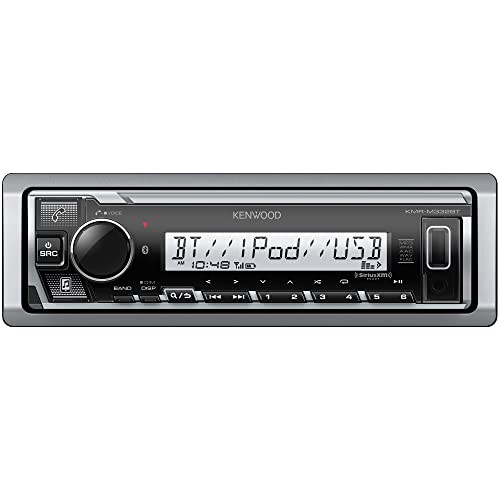
If you want a reliable, no-nonsense stereo that doesn’t break the bank, the Kenwood KMR-M332BT is the workhorse you need. It skips the fancy touchscreens for a durable, physical button layout that is incredibly easy to operate while the boat is bouncing over chop. It is a digital-only receiver, which is perfect for modern users who rely entirely on Bluetooth or USB for their music library.
This unit is ideal for smaller center consoles or weekend runabouts where space and simplicity are at a premium. It provides a massive jump in audio quality over factory-installed units without requiring a complex wiring overhaul. If you need a straightforward, weather-resistant solution that just works every time you turn the key, this Kenwood is the best value on the market.
Rockford Fosgate PMX-2: Best Compact Solution

The Rockford Fosgate PMX-2 is the ultimate "install it and forget it" solution for tight spaces. Its compact, gauge-style design fits perfectly into standard tachometer cutouts, making it a favorite for retrofitting older dashboards. Despite its small footprint, it packs a punch with a built-in amplifier that can drive a pair of speakers without needing external hardware.
This stereo is designed for the minimalist who wants a clean dash without sacrificing connectivity. It features a simple, rotary volume knob that is much safer to use than a touchscreen when you are navigating through waves. If you have a small boat or a limited console area and want a punchy, reliable sound system, this is the compact champion.
Clarion CMS4: Best Weather-Resistant Display

Clarion has long been a leader in marine audio, and the CMS4 proves why with its unique "black box" design. By separating the control unit from the main processor, you can mount the brain of the system in a dry, protected area while keeping the sleek, weather-resistant display exposed to the elements. It is an ingenious solution for boats that lack a traditional dashboard or covered helm.
The display itself is ruggedized to withstand constant salt spray, heavy rain, and direct UV rays without yellowing or fogging. It offers a wide range of source options, including global radio bands and seamless Bluetooth integration. If your boat is an open-style vessel where the electronics are constantly exposed to the sea, the CMS4 offers the best protection available.
Sony DSX-M80: Best High-Power Marine Stereo

The Sony DSX-M80 is a powerhouse that brings serious volume to the marine market without the need for an external amplifier. Its internal Class D amplifier is exceptionally efficient, delivering high-output sound while drawing minimal power from your boat’s battery. This makes it an excellent choice for boaters who spend long days on the water and want to avoid draining their cranking battery.
Beyond the power, the unit features a dual-zone control that lets you balance the volume between your cockpit and your swim platform. It is built to withstand the rigors of the marine environment with a UV-resistant finish and an anti-corrosive circuit board. If you want a loud, high-performance system that is easy to install and doesn’t require extra power components, the Sony DSX-M80 is unmatched.
Wet Sounds WS-MC-20: Best Gauge-Style Unit
Wet Sounds is synonymous with marine performance, and the WS-MC-20 is their answer to the gauge-style stereo market. It features a high-resolution, full-color screen that is surprisingly easy to read, even in bright, direct sunlight. The interface is snappy and intuitive, allowing you to toggle through sources and settings without scrolling through endless, confusing menus.
This unit is built to be the heart of a high-performance audio system, offering plenty of output options for external amplifiers and subwoofers. It feels rugged, looks premium, and performs with the consistency you expect from a brand that specializes in marine audio. For those who want a compact, gauge-sized unit that doesn’t compromise on features or style, the WS-MC-20 is the top contender.
Saltwater Durability and IPX Rating Standards
Understanding IPX ratings is critical when shopping for marine electronics. An IPX5 rating means the unit can withstand low-pressure water jets, while an IPX7 rating indicates it can actually be submerged for short periods. In a saltwater environment, you should always aim for the highest rating possible to prevent internal corrosion from microscopic salt crystals.
Beyond the rating, look for "conformal coating" on the internal circuit boards. This is a thin, protective layer that seals the delicate electronics from moisture and salt air, which are the primary killers of marine stereos. Never assume that a "water-resistant" label is enough; always look for the specific IPX certification to ensure your investment is protected.
Wiring and Installation Tips for Marine Audio
The biggest mistake most boaters make is using standard automotive wiring. Saltwater will wick up standard copper wire, causing "green rot" that eventually kills your signal and creates hazardous shorts. Always use tinned marine-grade wire and heat-shrink butt connectors to create a gas-tight seal that prevents moisture from entering the connection.
Ensure your stereo is wired to a dedicated marine fuse block rather than tapping into existing accessory lines. This keeps your audio system isolated from sensitive navigation equipment and engine electronics, preventing interference. A clean, organized wiring job is the best insurance policy you can have against electrical gremlins down the road.
Maintaining Your Stereo in Harsh Environments
A little maintenance goes a long way in extending the life of your marine audio system. After every trip, especially in saltwater, give your head unit a quick wipe-down with a damp, fresh-water cloth to remove salt residue. Salt is hygroscopic, meaning it attracts moisture from the air, so leaving salt on your buttons or screen is a recipe for long-term damage.
If your boat sits uncovered, invest in a simple, inexpensive marine stereo cover. These covers provide an extra layer of UV and salt protection, preventing the screen from clouding and the buttons from becoming brittle. By spending two minutes cleaning and covering your unit, you can easily double the lifespan of your marine stereo.
Investing in a high-quality marine stereo is about more than just playing music; it is about ensuring your time on the water is accompanied by the reliability and performance you deserve. By selecting a unit with the right IPX rating and installing it with marine-grade materials, you can enjoy your favorite tracks for years to come. Choose wisely, keep your gear clean, and let the soundtrack of your summer be the best part of every voyage.
