6 Best Swim Fins For Scuba Diving For New Divers
Choosing the right fins is vital for new divers. We review the top six models that offer the best balance of comfort, propulsion, and ease for beginners.
Stepping into the underwater world for the first time is a transformative experience, but your success often hinges on the gear propelling you forward. Choosing the right pair of scuba fins can turn a tiring struggle against the current into a graceful, effortless glide. This guide will help you navigate the market to find the perfect match for your diving style and comfort needs.
Disclosure: As an Amazon Associate, this site earns from qualifying purchases. Thank you!
Scuba Diving Fins: Key Factors for New Divers
When you are starting out, the sheer variety of fin designs can feel overwhelming. The most critical factor for a beginner is blade stiffness, which dictates how much effort you must exert to move through the water. A fin that is too stiff will quickly lead to leg cramps, while one that is too soft may fail to provide the necessary thrust in challenging conditions.
You must also consider the difference between full-foot fins and open-heel fins. Open-heel fins are generally the standard for scuba diving because they require neoprene booties, which provide essential thermal protection and foot support during shore entries. Think about the environments you plan to frequent; rocky shore entries demand a rugged sole, while boat diving might allow for more lightweight options.
Finally, don’t overlook the weight and buoyancy of the fins. Some fins are designed to be neutrally buoyant, while others are slightly negative, which can help keep your feet down if you struggle with floating legs. Balancing your physical strength with the intended dive environment is the secret to a long, enjoyable career as a diver.
Mares Avanti Quattro Plus: Best All-Rounder
Experience powerful propulsion with the Mares Avanti Quattro + Fins. Their four-rib design maximizes energy transfer, while the bungee strap ensures easy on/off convenience.


If you want a fin that does everything well, the Mares Avanti Quattro Plus is the gold standard. It features a four-channel design that optimizes water flow, providing incredible thrust without requiring you to have professional-level leg strength.
This fin is perfect for the new diver who isn’t sure if they will be doing calm reef dives or slightly more demanding drift dives. It is forgiving enough for a beginner’s inefficient kick but powerful enough to handle moderate currents. If you want one pair of fins to last you for the next decade of your diving journey, this is the reliable choice you need.
Cressi Frog Plus: Ideal for Gentle Kicking

The Cressi Frog Plus is specifically engineered for divers who prefer a relaxed, low-effort kicking style. It utilizes a dual-material construction that allows the blade to flex just enough to reduce the strain on your ankles and calves during long sessions.
This fin is a dream for those who find traditional, stiffer fins physically exhausting. If you have a history of leg cramps or simply want to conserve your air supply by minimizing exertion, these fins are your best friend. They aren’t designed for high-speed maneuvering, but for steady, comfortable exploration, they are unmatched.
Tusa Solla Fins: Best for Efficient Propulsion
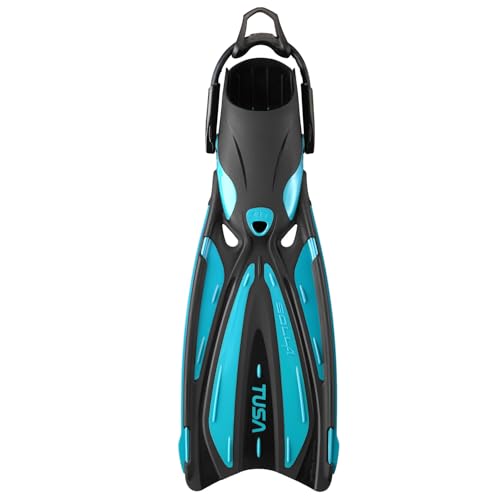
The Tusa Solla uses a unique "ForcElast" technology that creates a snappy, responsive feel. The 20-degree angled blade design is the real star here, as it compensates for the natural angle of your foot when you are in a horizontal swimming position.
This design is ideal for the diver who wants to master proper trim and buoyancy from day one. By aligning the blade with your natural kick, you’ll find that you can move through the water with significantly less effort. If you value efficiency and want to look like a seasoned pro while you’re still learning the ropes, the Solla is a fantastic investment.
Scubapro Seawing Nova: Superior Fin Comfort
The Scubapro Seawing Nova is a radical departure from traditional paddle fins, utilizing a unique "articulated hinge" that allows the blade to pivot. This creates a wing-like effect that generates massive amounts of power with very little resistance on the upstroke.
This fin is perfect for divers who prioritize comfort above all else. Because the hinge takes the pressure off your joints, you can dive for longer periods without feeling that familiar "burn" in your shins. If you have sensitive ankles or want a fin that feels like an extension of your body rather than a piece of plastic, look no further.
Atomic Aquatics BladeFin: High Performance

Atomic Aquatics is known for precision engineering, and the BladeFin is no exception. It uses a firm, high-performance blade that is designed to channel water directly off the tip, providing maximum acceleration and control.
This fin is for the new diver who plans to progress quickly into advanced training or challenging environments. It is a stiffer fin, so it requires a bit more leg strength, but the payoff is absolute control in tight spaces or heavy currents. If you are an athlete who wants a fin that responds instantly to your input, the BladeFin is the way to go.
Oceanic Viper Fins: Best for Easy Maneuvering

The Oceanic Viper is all about agility and ease of use. It features a flexible, lightweight design that makes it incredibly easy to pack for travel and simple to maneuver in the water, especially when performing delicate movements around coral.
These are an excellent entry-level choice for divers who are still working on their fine motor control. They are forgiving, easy to put on, and provide enough power for standard recreational diving. If you want a no-fuss, highly maneuverable fin that makes learning the basics a breeze, the Viper is a perfect starting point.
How to Properly Fit Your New Scuba Fins

Proper fit is the difference between a great dive and a painful one. When trying on open-heel fins, wear the exact neoprene booties you intend to use in the water; the thickness of the sole and the neoprene will significantly change the fit. Your foot should feel snug and secure, but you should not feel any pinching or pressure points.
Ensure your heel is fully seated in the foot pocket. If you have to force your foot in, the pocket is too small, which will inevitably lead to cramping. Conversely, if your foot slides around, you will lose power and likely develop blisters. Always test the strap tension; you want it tight enough to hold the fin firmly, but loose enough that you can easily adjust it with gloves on.
Essential Fin Care and Maintenance Tips
Your fins are an investment, and a little care goes a long way. After every dive, rinse your fins thoroughly in fresh water, paying special attention to the buckles and straps where salt crystals can accumulate and cause seizing. Avoid leaving your fins in direct, harsh sunlight for extended periods, as UV rays can degrade the rubber and plastic over time.
Store your fins lying flat or hanging by the heel strap, ensuring the blades are not bent or under pressure. If the blades are stored in a deformed position for weeks, they can take a permanent set, which will ruin their performance. A well-maintained pair of fins will perform exactly as they did on day one, dive after dive.
Safety Protocols for Using Fins in Currents
Using fins effectively in a current is a vital safety skill. When you encounter a flow, avoid "bicycle kicking," which creates drag and wastes energy. Instead, focus on a long, slow, and powerful flutter kick, keeping your movements streamlined and close to your body.
If the current picks up, resist the urge to kick harder and faster, as this will only increase your heart rate and deplete your air. Instead, look for natural breaks in the current, such as the leeward side of a reef, and maintain a steady, controlled pace. Always remember that your fins are tools for propulsion, not for fighting against the ocean; if the current is too strong, it is always safer to abort the dive or adjust your path.
Selecting your first pair of scuba fins is a milestone that marks your transition from student to independent diver. By focusing on comfort, efficiency, and the specific environments you plan to explore, you can ensure your gear supports your growth rather than holding you back. Enjoy the journey, stay safe, and savor every moment beneath the surface.