6 Best Dock Anchors For Strong Currents For Deep Waters
Securing vessels in deep, fast-moving water requires specialized gear. We evaluate the top 6 dock anchors designed to provide stability against strong currents.
There is nothing quite as unsettling as waking up to find your floating dock has drifted twenty feet downstream during a midnight surge. Securing a dock in deep, fast-moving water requires more than just a heavy weight; it demands a strategic understanding of seabed geology and hydrodynamic forces. Choosing the right anchor is the difference between a secure platform and a costly recovery mission.
Disclosure: As an Amazon Associate, this site earns from qualifying purchases. Thank you!
Understanding Anchor Physics in Deep Currents
In deep water, the primary challenge is not just the depth, but the "scope"—the ratio of the length of your anchor line to the depth of the water. When current speeds increase, the lateral force exerted on the dock creates a massive pivot point that can easily pull an improperly set anchor out of the substrate. You aren’t just holding weight; you are fighting a constant, kinetic push.
Physics dictates that the angle of pull is critical. If your anchor line is too short, the force pulls the anchor vertically, effectively "tripping" it out of the bottom. In deep, high-current environments, you need a setup that encourages the anchor to bury deeper as the tension increases, rather than dragging across the surface.
Factors for Selecting Heavy-Duty Dock Anchors
When selecting an anchor for deep-water currents, prioritize the bottom composition of your specific location. An anchor that excels in soft, silty riverbeds will likely fail miserably on a solid rock shelf. Always identify if your floor is sand, mud, clay, or rocky debris before making a purchase.
Weight is important, but geometry is king. A heavy anchor with poor design will still drag, whereas a lighter, high-performance anchor with the right fluke angle will lock into the seabed like a claw. Always aim for an anchor that is rated for a boat significantly larger than the size of your dock to account for the increased surface area of floating structures.
Danforth Standard Anchor for Sandy Riverbeds
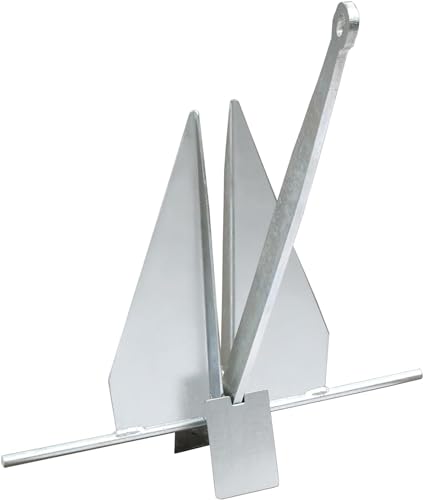

The Danforth is the classic, time-tested choice for sandy or muddy bottoms where it can bury deep and stay there. Its lightweight, flat fluke design allows it to penetrate soft substrates quickly, creating a massive amount of surface area resistance. It is an affordable, straightforward solution for those who know their riverbed is soft and consistent.
However, be aware that the Danforth can struggle in rocky or heavily weeded areas where the flukes cannot penetrate. If your dock is located in a high-current sandy channel, this is your go-to. If you are dealing with a rocky or shifting bottom, skip this one and look elsewhere.
Fortress FX-Series Aluminum Precision Anchors

The Fortress is a marvel of engineering, offering an adjustable fluke angle that allows you to customize the anchor for different seabed densities. Because it is constructed from high-tensile aluminum, it is significantly lighter than steel counterparts, making it easier to deploy and retrieve without sacrificing holding power. It is the gold standard for those who want performance without the back-breaking weight.
This anchor is ideal for the recreationist who wants a premium, long-lasting piece of gear that won’t rust or corrode in harsh water conditions. While the price point is higher, the ability to reset quickly in shifting currents makes it worth every penny. If you prioritize ease of handling and high-end materials, this is the anchor for your dock.
Lewmar Claw Anchor for Rocky Deep Water Floors
If your dock sits over a rocky or uneven floor, the Lewmar Claw is arguably the most reliable option on the market. Its one-piece design is incredibly rugged, and it is specifically built to reset itself instantly if the current shifts direction or the anchor is dragged. It doesn’t rely on sharp flukes, which can get stuck or bent on rocks, but rather on its ability to roll and hook into crevices.
This anchor is for the dock owner who is tired of their anchor getting "hung up" or failing to set on hard, rocky bottoms. It is simple, virtually indestructible, and designed to handle the unpredictable nature of deep-water currents. It’s a workhorse that provides peace of mind in challenging terrain.
Mantus Marine M1 Anchor for Maximum Holding
The Mantus M1 is widely considered the king of setting power, featuring a sharp, precision-engineered tip that penetrates even the most stubborn, hard-packed sand or clay. It is designed to sink deep into the seabed, and once it is set, it takes a monumental force to break it loose. This is the anchor you choose when you absolutely cannot afford to have your dock move an inch.
This is an aggressive, high-performance tool for those facing extreme current conditions. It is not the easiest to store or handle due to its design, but the trade-off is unparalleled security. If your dock is in a high-traffic area with strong tidal flows, the Mantus M1 is the investment that will let you sleep soundly.
Rocna Vulcan Anchor for Superior Reliability
The Rocna Vulcan is a masterpiece of balance and weight distribution, designed to set quickly and stay set regardless of the current’s direction. Its unique shank shape allows it to fit on most bow rollers, but for a dock application, it provides a level of stability that is hard to match. It is designed to roll upright every single time it hits the bottom.
This anchor is perfect for the person who wants a "set it and forget it" solution. It is incredibly reliable in a wide variety of substrates, from soft mud to hard sand. While it is a premium product, the sheer consistency of the Vulcan makes it a top-tier choice for high-stakes, deep-water anchoring.
Windline Stainless Steel Anchor for Durability

Windline anchors are built for the aesthetic and structural demands of high-end dock setups. Beyond their polished, corrosion-resistant appearance, they offer excellent holding power in a variety of conditions. They are the ideal choice for someone who wants to maintain a clean, professional look without sacrificing the safety of their floating dock.
These anchors are for the dock owner who values longevity and appearance. They hold well in moderate currents and provide a level of durability that cheaper, galvanized options simply cannot match. If you want a permanent, high-quality solution that looks as good as it performs, Windline is your best bet.
Proper Chain and Rode Setup for Deep Waters
Even the best anchor will fail if it is attached to a weak chain or rope. In deep water, you must use a heavy-duty, galvanized chain—known as a "ground chain"—between the anchor and your primary line. This chain provides the necessary weight to keep the anchor shank flat on the bottom, ensuring the flukes stay engaged.
- Use high-test galvanized chain: It resists abrasion from rocks and provides the "catenary" (the curve in the line) needed to absorb shock loads.
- Calculate your scope: Always aim for a 5:1 or 7:1 ratio of line length to water depth.
- Incorporate a swivel: This prevents the chain from twisting as the dock moves with the current, which can otherwise "unscrew" the anchor from the bottom.
Safety Protocols for Securing Floating Docks
Securing a dock is not a one-time project; it requires seasonal maintenance and vigilance. Before the start of the heavy-use season, inspect your shackles, swivels, and chains for signs of wear or galvanic corrosion. Even stainless steel can degrade over time in certain water chemistries, so replace any hardware that shows signs of pitting or thinning.
Additionally, always have a secondary backup system if you are in an area prone to severe weather or extreme tidal surges. A secondary anchor or a heavy-duty mooring buoy can act as a fail-safe should your primary system be overwhelmed. Safety is about redundancy, not just finding the single strongest piece of gear.
Securing a dock in deep, fast-moving water is a blend of science, geography, and smart gear selection. By matching the right anchor geometry to your seabed and maintaining your chain and hardware, you eliminate the risks associated with unpredictable currents. Choose your equipment with confidence, keep a regular maintenance schedule, and enjoy the peace of mind that comes with a perfectly anchored dock.