6 Best Pool Ph Adjusters For Balanced Water For Homeowners
Keep your pool water safe and clear. We review the 6 best pH adjusters for homeowners to ensure optimal balance, protect equipment, and improve swim comfort.
There is nothing quite like the feeling of diving into a crystal-clear pool on a sweltering summer afternoon. However, behind that inviting sparkle lies a delicate chemical balance that keeps your water safe and your equipment running smoothly. Mastering your pool’s pH is the single most important habit you can develop to ensure your backyard oasis remains a sanctuary rather than a maintenance nightmare.
Disclosure: As an Amazon Associate, this site earns from qualifying purchases. Thank you!
Why Proper Pool pH Balance Matters for Swimmers
When your pool water is properly balanced, it is gentle on the eyes, skin, and hair of everyone who takes a dip. If the pH drifts too far out of range, swimmers often report that tell-tale stinging sensation in their eyes or dry, itchy skin after a session. Keeping these levels in check ensures that your pool remains a comfortable, inviting environment for family and friends.
Beyond personal comfort, balanced pH is the secret to protecting your pool’s infrastructure. Water that is too acidic can corrode metal ladders, heaters, and pump components, leading to expensive repairs down the road. Conversely, water that is too basic can cause scaling on pool surfaces and cloudy water, turning a beautiful pool into an eyesore that is difficult to clear up.
Understanding pH Levels and Pool Water Chemistry
The pH scale measures how acidic or basic your water is, ranging from 0 to 14. For a swimming pool, the "sweet spot" is generally between 7.2 and 7.8, with 7.4 to 7.6 being the ideal target. Think of this range as the foundation for your entire chemical regimen; if the pH is off, your chlorine won’t be able to sanitize the water effectively, no matter how much you add.
It is a common misconception that you only need to worry about chlorine levels to keep a pool clean. In reality, chlorine is highly pH-dependent; if your pH is too high, the chlorine becomes sluggish and ineffective, leaving your pool vulnerable to algae growth. Monitoring your pH is not just about water clarity—it is about ensuring your sanitizers are doing their job efficiently.
ARM & HAMMER Baking Soda: Best for pH Increases
If you find your pH consistently hovering on the low side, you don’t always need expensive specialty chemicals to fix it. Pure sodium bicarbonate, commonly known as baking soda, is a fantastic, cost-effective way to nudge your pH upward while also helping to stabilize your total alkalinity. It is a gentle, gradual approach that is perfect for homeowners who prefer a natural, multipurpose solution.


This is my go-to recommendation for anyone dealing with slightly acidic water who wants to avoid harsh synthetic chemicals. Because it is a mild base, it is very forgiving, making it nearly impossible to accidentally overshoot your target. If you are looking for a reliable, widely available, and budget-friendly way to maintain your pool’s balance, this is your best bet.
HTH pH Plus: Effective Granular pH Increaser
When your pH levels drop significantly, you need a targeted solution that works quickly and reliably. HTH pH Plus is a granular formula designed specifically to raise pH levels without disrupting other chemical balances. It dissolves cleanly and gets to work fast, which is exactly what you want when you are prepping the pool for a weekend gathering.
This product is ideal for the homeowner who wants a "set it and forget it" chemical that does exactly what the label promises. It is straightforward to measure and apply, reducing the guesswork that often leads to chemical imbalances. If you want a dedicated pool chemical that is engineered for performance and ease of use, HTH pH Plus is a solid choice.
Pool Mate pH Minus: Best Liquid Acid Solution

For those who prefer a liquid solution, Pool Mate pH Minus offers a fast-acting way to lower high pH levels. Liquid acid is often preferred by professionals because it disperses throughout the water column almost instantly, preventing the localized "clouding" that can sometimes happen with powders. It is perfect for those who have a good handle on their pool volume and want immediate results.
However, keep in mind that liquids require a bit more care during handling to avoid splashes. If you are comfortable measuring precise amounts and want the fastest way to bring your pH back into the safe zone, this liquid solution is a top-tier performer. It is a professional-grade tool that makes managing high pH levels a breeze.
In The Swim pH Decreaser: Sodium Bisulfate Choice
Keep your pool water balanced and safe with pH Reducer. This 90% sodium bisulfate formula lowers alkalinity, prevents cloudy water, and enhances chlorine effectiveness.

In The Swim pH Decreaser uses sodium bisulfate, a dry acid that is safer to store and handle than liquid muriatic acid. It is the perfect middle ground for the average homeowner: it’s powerful enough to drop high pH quickly, but it comes in a granular form that is much easier to manage. You won’t have to worry about the fumes or the risk of chemical burns associated with liquid acids.
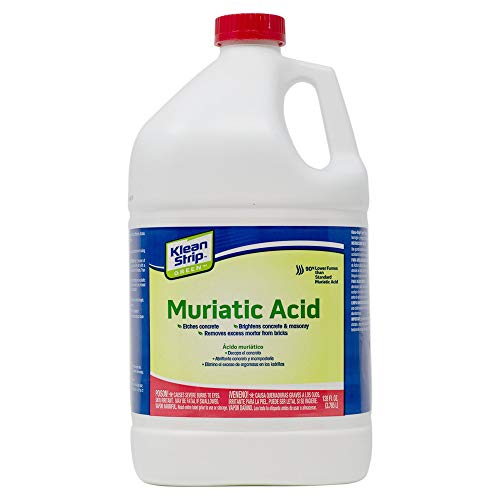
Etch and brighten concrete and masonry with Klean-Strip Green Safer Muriatic Acid. This formula removes excess mortar and produces 90% less fumes than standard muriatic acid.
I highly recommend this for anyone who wants a powerful, effective solution but is nervous about handling liquid chemicals. It is a staple in many pool sheds because it is stable, effective, and very easy to dose accurately. If you want a reliable dry acid that gets the job done without any fuss, this is the product you should reach for.
Clorox Pool&Spa pH Up: Reliable Balancing Agent
Clorox Pool&Spa pH Up is a high-quality granular increaser that is widely accessible and incredibly consistent. What I appreciate about this product is the clear, user-friendly instructions on the packaging, which helps take the intimidation factor out of pool maintenance. It is designed to raise pH levels efficiently, ensuring your water stays clear and your chlorine remains active.
This is a fantastic option for the homeowner who values brand reliability and wants a product that works the same way every single time. It is particularly great for beginners who are still learning the ropes of water chemistry. If you want a trusted, effective product that is easy to find at almost any local retailer, this is the one.
DryTec pH Minus: Concentrated Granular Formula
If you are fighting persistently high pH, you need a concentrated formula that doesn’t mess around. DryTec pH Minus is a potent granular product designed to tackle stubborn alkalinity and bring your pH down to the ideal range quickly. Because it is so concentrated, a little bit goes a long way, which saves you money in the long run.
This product is best suited for the experienced pool owner who knows their pool’s specific chemical demands and wants a heavy-duty solution. It is efficient, easy to store, and highly effective at managing even the most difficult water chemistry scenarios. If you need a high-performance chemical that packs a punch, DryTec is an excellent addition to your maintenance kit.
Essential Tools for Testing Your Pool Water pH
You cannot manage what you do not measure, and relying on guesswork is a recipe for disaster. Investing in a high-quality liquid test kit or reliable digital test strips is the first step in successful water maintenance. I always suggest using a DPD-based liquid test kit, as it tends to be more accurate and easier to read than basic strips when you are trying to fine-tune your chemicals.

- Liquid Test Kits: Offer the highest accuracy for pH and alkalinity.
- Digital Testers: Great for quick, objective readings without color-matching.
- Test Strips: Convenient for daily checks, but always keep a backup liquid kit.
Remember to test your water at least twice a week, especially during the peak of summer when high temperatures and heavy bather loads can cause pH to fluctuate rapidly. Keep a log of your readings to identify trends; if you notice your pH always rises after a heavy rain, you will know exactly when to have your chemicals ready.
Safety Tips When Handling Pool Chemical Adjusters
Always treat your pool chemicals with the respect they deserve by reading the safety labels before every single use. Never mix different chemicals together, as this can lead to dangerous reactions, particularly when dealing with acids and chlorine. Always add chemicals to the water, never add water to the chemicals, to prevent splashing and potential overheating.
Store your chemicals in a cool, dry, and well-ventilated area that is out of reach of children and pets. Wearing protective gear, such as gloves and safety goggles, is a simple but vital habit that prevents minor accidents from becoming major issues. By staying organized and cautious, you ensure that pool maintenance remains a safe and rewarding part of your home ownership experience.
Balancing your pool’s pH is not just about keeping the water looking pretty; it is the fundamental secret to a healthy, long-lasting swimming environment. By choosing the right chemical adjusters and committing to a consistent testing routine, you can spend less time troubleshooting and more time enjoying the water. Stay diligent with your maintenance, and your pool will remain the perfect retreat for years to come.