

8 Best Surf Training Balance Boards For Beginners
Explore the top 8 balance boards designed for beginner surfers to enhance stability and core strength on land. Learn how these tools prepare you for the water.
Mastering the waves starts long before you hit the shoreline, as any seasoned surfer will tell you that dry-land training is the secret to a shorter learning curve. Balance boards bridge the gap between solid ground and the unpredictable movement of the ocean, helping you build the muscle memory needed for a successful pop-up. Choosing the right board can mean the difference between a frustrating wipeout and your first long ride.
Disclosure: As an Amazon Associate, this site earns from qualifying purchases. Thank you!
Indo Board Original Training Package for New Surfers
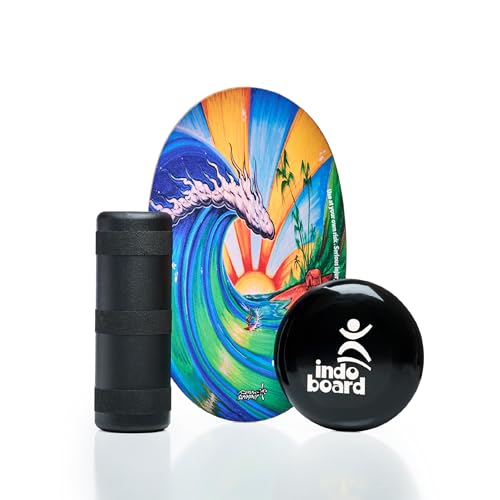

The Indo Board is the gold standard for a reason. It is the most recognizable name in the industry, and for beginners, the "Original Training Package" is a smart entry point because it includes both the roller and an inflatable cushion. This versatility allows you to scale your training as your confidence grows.
Using the cushion first allows you to find your center without the fear of the board shooting out from under you. It provides a 360-degree instability that is low to the ground and highly manageable. Once you’ve mastered the static balance, switching to the roller introduces the side-to-side motion that mimics trimming across a wave face.
This setup is particularly effective for practicing your stance. You can focus on keeping your knees bent and your gaze forward, rather than staring at your feet—a common mistake that leads to many early falls in the water. It’s a durable piece of gear that often lasts for decades.
Revolution 101 Balance Board Trainer for Core Stability

If you’re tight on space but serious about core engagement, the Revolution 101 is a compact powerhouse. It features a smaller deck and a weighted roller that provides a smooth, controlled glide. The design is intentional, focusing on the "sweet spot" of your balance.
The board’s surface is finished with a "Dura-Soft" grip, which means you can train barefoot without the abrasive feel of standard grip tape. This is vital for surfers, as it mimics the tactile feedback you get from a waxed surfboard or a traction pad. Training barefoot also helps engage the small muscles in your toes and arches.
The tradeoff here is the smaller size; it requires more precision in your foot placement. While this might feel challenging at first, it forces you to engage your deep core muscles to maintain stability. This pays off during high-energy paddling sessions where a stable core keeps your board from rocking side-to-side.
4thCore Surf Balance Board for Realistic Wave Motion

Surfing isn’t just about left-to-right movement; it involves complex weight shifts and rail pressure. The 4thCore board is designed to simulate the multi-directional tilt you experience when a wave pushes against your rail. It feels less like a toy and more like a piece of specialized athletic equipment.
This board uses a unique design that encourages "rail-to-rail" transitions. It’s an excellent choice if you’ve already spent a few days in the whitewash and are looking to start practicing your bottom turns on land. The motion is fluid, requiring the same subtle weight transfers you use to steer a surfboard.
By focusing on these lateral movements, you develop the "soft knees" required for absorbing chop on the water. It’s a more advanced sensation than a simple roller board, making it a great "bridge" board for those moving from beginner to intermediate levels.
Whirly Board Spinning Balance Board for Advanced Agility

Most balance boards limit you to one or two planes of motion, but the Whirly Board adds a center "kingpin" that allows for 360-degree spins. This is a game-changer for beginners who eventually want to progress to more advanced maneuvers. It introduces the concept of rotation early in your training.
It challenges your agility by forcing you to manage rotation while maintaining your center of gravity. It’s less about "staying on" and more about "moving with" the board, which is exactly how you should approach a surfboard. If you fight the motion, you fall; if you flow with it, you stay upright.
Because it can spin, it’s best used on a rug or a dedicated training mat. This prevents the board from sliding away on hard surfaces and provides a bit of cushioning for your joints. It’s a high-energy trainer that keeps the "fun" in functional fitness.
StrongTek Wooden Balance Board for Beginner Stability

Some beginners find the height of a roller-based board intimidating. The StrongTek Wooden Balance Board offers a "rocker" design that stays low to the ground, significantly reducing the risk of a hard fall. The curved bottom provides a gentle side-to-side motion that is very easy to control.
This is a perfect "entry-level" tool for building basic leg strength and confidence. It’s especially useful for older beginners or those recovering from minor injuries who need to rebuild their stabilizer muscles before tackling the surf. You get the benefit of balance training without the steep learning curve of a rolling cylinder.
The simplicity of the design makes it highly portable. You can easily slide it under a sofa or bed when not in use. While it won’t simulate a 360-degree turn, it is excellent for building the quadriceps and calf strength needed for long sessions in the lineup.
Yes4All Wooden Wobble Balance Board for Ankle Strength

While not a traditional "surf" shape, the Yes4All Wobble Board is an essential tool for ankle conditioning. Surfing places immense stress on the ankles as they micro-adjust to the water’s surface. This circular board targets those specific tendons and ligaments that are often overlooked in the gym.
It allows for a full range of motion—tilting forward, backward, and side-to-side. Integrating this into a morning routine can help prevent the common "surfer’s ankle" strains that often cut a beach trip short. Strong ankles lead to better board control and more powerful turns.
- Pros: Compact, affordable, and targets 360-degree stability.
- Cons: Does not mimic the "glide" of a surfboard as well as roller boards.
- Best For: Pre-surf warm-ups and injury prevention.
URBNFit Wooden Balance Board Trainer for Daily Practice
For those who want a reliable, no-frills tool for daily practice, the URBNFit trainer is a sturdy option. It features a solid wood construction and a simple roller design that focuses on the fundamentals of lateral balance. The deck is wide enough to allow for various foot placements, mimicking different surf stances.
The simplicity of this board is its greatest strength. It’s easy to hop on for five minutes between tasks, making it more likely that you’ll actually use it consistently. Consistency is the only way to build lasting muscle memory. If you leave it in your living room, you’ll find yourself balancing while watching TV or waiting for coffee.
It features a non-slip surface that works well with both shoes and bare feet. For beginners, wearing a pair of flat-soled skate shoes can actually provide a bit more stability during the first few sessions. As you progress, moving to barefoot training will further sharpen your proprioception.
Eofit Surf Balance Board with Roller for Better Control
The Eofit board stands out because of its focus on control. The roller is designed with a slightly grippier texture, which prevents it from slipping on smooth floors. This gives the rider a more predictable experience, which is crucial when you are first learning to find your center.
It also features safety "stoppers" on the underside of the deck. These prevent the board from sliding completely off the roller, a common cause of "yard sales" in the living room. These stoppers act as a safety net, allowing you to push your limits without the board flying across the room.
This controlled environment is ideal for practicing the "pop-up" motion. You can transition from a plank position to a standing surf stance with the confidence that the board will stay relatively beneath you. It’s a fantastic tool for building the explosive power needed to get to your feet before the wave passes you by.
Consistent land-based training is the most effective way to ensure your time in the water is spent riding waves rather than chasing your board. By selecting a trainer that matches your current skill level and goals, you’ll develop the stability and confidence needed to tackle the surf. Stay patient, keep practicing on dry land, and the ocean will reward your hard work.
